
Professional Qualification
Undergraduate Certificate in Healthcare Risk Modeling and Stratification
Acquire in-depth knowledge of healthcare risk modeling and stratification, enabling informed resource allocation and improved patient outcomes.

Undergraduate Certificate in Healthcare Risk Modeling and Stratification
$99
• 2 MonthsCourse Overview
Ideal for Aspiring Healthcare Professionals
This Undergraduate Certificate is designed for students and professionals in healthcare, public health, or a related field. Specifically, it suits those seeking to enhance their analytical skills in healthcare risk modeling and stratification. Moreover, it is perfect for individuals who want to transition into a healthcare data analysis role.
Key Takeaways and Skills
Upon completing this certificate, students will gain hands-on experience in healthcare risk modeling and stratification techniques. They will learn to analyze data, identify trends, and develop predictive models. Furthermore, they will develop essential skills in data visualization, communication, and interpretation of results.
Description
Unlock the Power of Data-Driven Healthcare
Are you ready to transform healthcare delivery? Our Undergraduate Certificate in Healthcare Risk Modeling and Stratification empowers you to analyze complex healthcare data, identify high-risk patients, and inform strategic decision-making. By mastering risk modeling and stratification techniques, you'll become a valuable asset in the healthcare industry.
Career Opportunities Ahead
Graduates can pursue roles in healthcare management, policy development, and data analysis, working in hospitals, insurance companies, or government agencies. With this certificate, you'll be poised to drive positive change and improve patient outcomes.
Unique Features
Our program offers:
Hands-on experience with healthcare datasets and risk modeling tools
Expert instruction from industry professionals
Flexible online learning options to fit your schedule
Opportunities to collaborate with peers from diverse backgrounds
Join our community of changemakers and unlock the potential of data-driven healthcare. Enroll now!
Key Features
Quality Content
Our curriculum is developed in collaboration with industry leaders to ensure you gain practical, job-ready skills that are valued by employers worldwide.
Created by Expert Faculty
Our courses are designed and delivered by experienced faculty with real-world expertise, ensuring you receive the highest quality education and mentorship.
Flexible Learning
Enjoy the freedom to learn at your own pace, from anywhere in the world, with our flexible online learning platform designed for busy professionals.
Expert Support
Benefit from personalized support and guidance from our expert team, including academic assistance and career counseling to help you succeed.
Latest Curriculum
Stay ahead with a curriculum that is constantly updated to reflect the latest trends, technologies, and best practices in your field.
Career Advancement
Unlock new career opportunities and accelerate your professional growth with a qualification that is recognized and respected by employers globally.
Topics Covered
- Introduction to Healthcare Risk Modeling: Understanding the fundamentals of healthcare risk modeling and its applications.
- Data Management and Analytics in Healthcare: Collecting, analyzing, and interpreting healthcare data for informed decision-making.
- Healthcare Systems and Policy: Exploring healthcare systems, policies, and their impact on risk modeling and stratification.
- Statistical Modeling for Healthcare Risk: Applying statistical techniques to model and analyze healthcare risks and outcomes.
- Healthcare Risk Stratification and Patient Segmentation: Stratifying patients based on risk factors and developing targeted interventions.
- Implementation and Evaluation of Healthcare Risk Models: Implementing and evaluating the effectiveness of healthcare risk models in real-world settings.
Key Facts
Overview
Gain expertise in healthcare risk modeling and stratification with this certificate program.
Key Details
Audience: Healthcare professionals, students, and data enthusiasts.
Prerequisites: Basic statistics, data analysis, and programming skills.
Program Outcomes
Develop analytical skills: Apply data-driven insights to healthcare.
Improve patient outcomes: Identify high-risk patients using predictive models.
Enhance career prospects: Boost employability in healthcare analytics.
Apply industry-standard tools: Master healthcare risk modeling software.
Why This Course
Pursuing an Undergraduate Certificate in Healthcare Risk Modeling and Stratification is a strategic move. Moreover, it enhances learners' skills in data analysis and healthcare management. Consequently, they become valuable assets to their organizations.
Here are three key benefits:
Gain in-demand skills in healthcare risk modeling and stratification, making them competitive job candidates.
Develop expertise in data analysis and interpretation, enabling informed decision-making.
Enhance career prospects, especially in healthcare management and policy roles.
Course Brochure
Download the detailed course brochure to learn more about Undergraduate Certificate in Healthcare Risk Modeling and Stratification

Pay as an Employer
Request an invoice for your company to pay for this course. Perfect for corporate training and professional development.
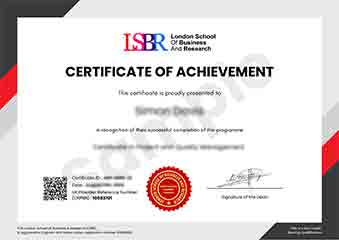
Sample Certificate
Preview the certificate you'll receive upon successful completion of this program.
Flexible Learning
24/7 Support
Enrol & Start Anytime
Recommended Learning Hours : 2-4 Hrs/Week
100% Online
Corporate Invoicing Available
What People Say About Us
Hear from our students about their experience with the Undergraduate Certificate in Healthcare Risk Modeling and Stratification at HealthCareCourses.
Oliver Davies
United Kingdom"This course provided a comprehensive understanding of healthcare risk modeling and stratification, equipping me with the analytical skills and knowledge to accurately assess patient risk and develop targeted interventions. The course material was well-structured and relevant, allowing me to gain practical experience in data analysis and risk assessment techniques that I can now apply in my career. The skills and knowledge gained have significantly enhanced my ability to contribute to the development of effective healthcare strategies and policies."
Rahul Singh
India"This course has given me the unique ability to analyze complex healthcare data and develop actionable risk models that inform business decisions, which has been a game-changer in my role as a healthcare consultant. The skills I've gained in stratification and risk modeling have allowed me to drive more informed and effective care management strategies, ultimately leading to improved patient outcomes and reduced costs. The knowledge and expertise I've acquired have also significantly enhanced my career prospects and opened up new opportunities in the field."
Ryan MacLeod
Canada"The course structure provided a clear and logical progression of topics, allowing me to build a solid foundation in healthcare risk modeling and stratification. I found the comprehensive content to be highly relevant and applicable to real-world scenarios, which significantly enhanced my understanding of the subject. This course has been instrumental in broadening my knowledge and skills, equipping me with the tools to make informed decisions in a healthcare setting."
More Courses You Might Like
Explore similar courses to expand your learning journey
From Our Blog
Insights and stories from our business analytics community
Future-Proofing Your Healthcare Risk Modeling and Stratification Skills
Future-proof your healthcare career with data-driven risk modeling and stratification skills.
Healthcare Risk Modeling and Stratification Innovation Culture
"Unlock the power of data-driven healthcare with our Global Certificate in Healthcare Risk Modeling and Stratification, empowering you to transform healthcare delivery and drive positive change."
Emerging Technologies in Healthcare Risk Modeling and Stratification
Transform healthcare with data-driven insights and risk modeling skills.